
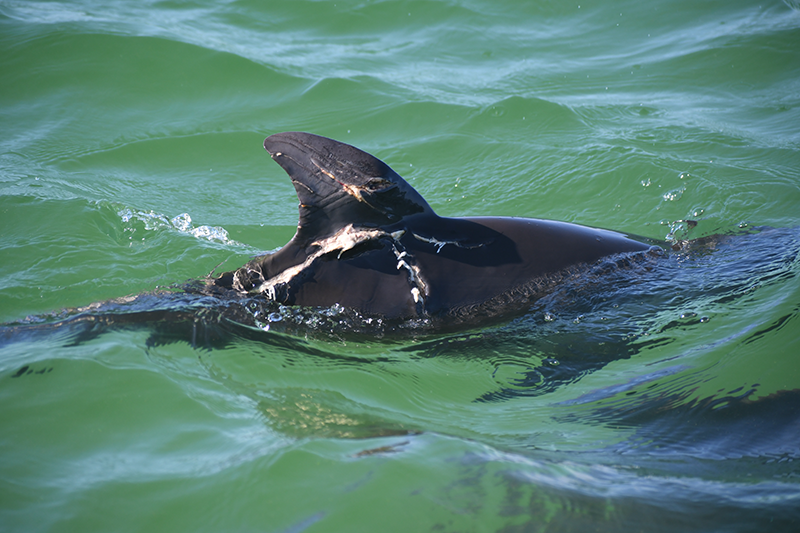
Dolphin 6741, the 2025 calf of 1674, is shown here with a fresh shark bite wound we observed in September 2025.
Did you know that in addition to studying dolphins, we also study sharks? That’s because we need to understand dolphin prey and predators to gain a deeper understanding of the ecosystem dynamics that shape the dolphin community.
Through monthly photographic identification surveys, we document shark bite wounds on local dolphins, providing evidence of unsuccessful predation attempts (that is, attempts by sharks to eat the dolphins). These data are crucial for understanding seasonal and annual changes in predation pressure on the dolphin community.
In 2025, the SDRP has documented at least seven Sarasota resident dolphins with fresh shark bites. Bull sharks and tiger sharks are the most frequent predator of the dolphin residents. (As part of her thesis research, New College of Florida MS student and former SDRP intern Sydney Haas is working to identify which shark species are responsible for the observed bite wounds.)
In the past few years, we have begun tagging coastal shark species in collaboration with Mote Marine Laboratory’s Shark and Ray Conservation Research Program to better understand shark-dolphin interactions in the area. Most of our efforts have focused on bull sharks — the primary predator to the Sarasota dolphin community — using acoustic transmitters to track their movements and habitat use (read more here). To date at the end of 2025, we had tagged 55 bull sharks with transmitters expected to last seven to nine years. Because receiver downloads provide tag detection data primarily from the previous year, we have only recently begun to receive the data to be able to analyze shark movements within Sarasota Bay.
During 2023 and 2024, six bull sharks were detected on receivers located within Sarasota Bay or in the passes connecting it to the Gulf. Most of the detections occurred at night between June and November. This seasonal use also coincides with when we most often see fresh shark bite wounds on the dolphins. Of those sharks detected in Sarasota Bay, three of the sharks — “Samantha,” “Scout,” and “Wiley” — returned in 2023 and 2024. Scout, a 191 cm male tagged along the coast of Anna Maria Island in September 2023, spent much of October inside Sarasota Bay in both years. We’ll learn if he visited the area again in 2025 after the SCAN receivers are downloaded in spring 2026.
Additional bull sharks have also been detected along the coast and at artificial reef sites, and we continue to track their wider movements through iTAG and FACT, two collaborative regional acoustic telemetry networks. We are also monitoring the movements of other shark species including tiger sharks, sandbar sharks, dusky sharks and one scalloped hammerhead shark.
Funding for this research has been provided by an anonymous donation to Brookfield Zoo Chicago and Mote Scientific Foundation. Special thanks to Jack Morris, Val Hagan, Dr. Bob Hueter, Dr. Demian Chapman, Capts. Dean Dougherty, Greg Byrd, Pete Hull and Cody Cole (Mote Marine Laboratory), as well as Dr. Jayne Gardiner and Tonya Wiley for their assistance with shark tagging and sampling.
—Dr. Krystan Wilkinson
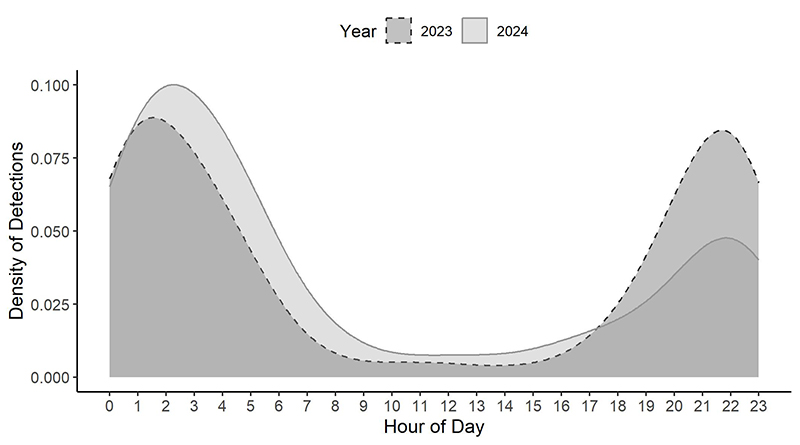
The figure above shows the density of bull shark detections within Sarasota Bay across hours of the day, showing peak occurrence at night.
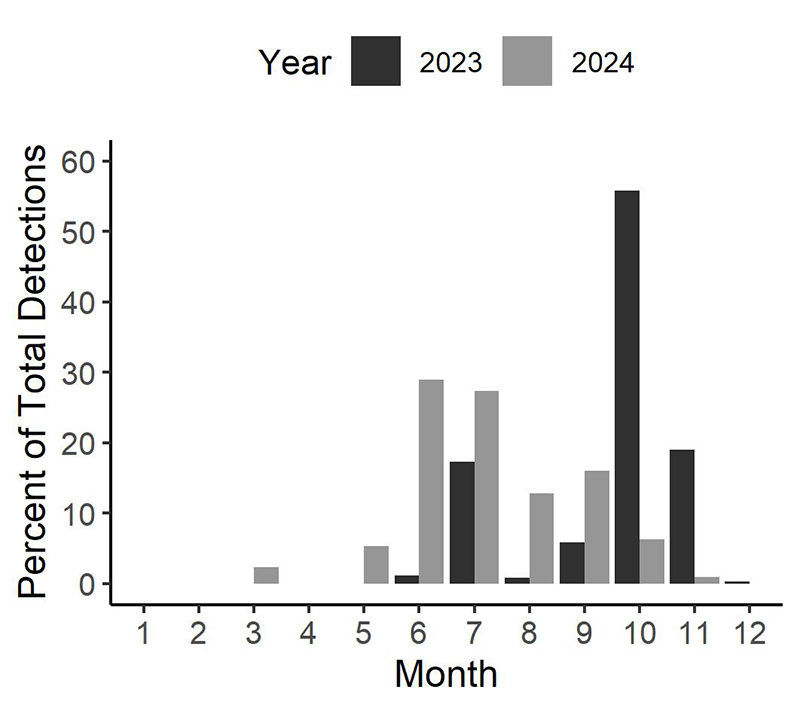
This figure shows the monthly percentage of bull shark detections that occur within Sarasota Bay, showing greatest presence during June-November.